
Audit Overview
Your store's untapped revenue potential — and how to unlock it
Why We Created This Audit
We analyzed newtonbaby.com the same way we've audited 350+ e-commerce stores — looking for the specific gaps between your current experience and what top-performing Toys & Hobbies stores deliver. Every finding in this report is a revenue opportunity backed by industry data and competitive benchmarks.
What We Analyzed
- UX & Conversion Design8 findings
- Technology & App StackPlatform + 5 apps
- Industry BenchmarksToys & Hobbies
Pages Analyzed
- Homepage2 findings
- Collection Pages2 findings
- Product Pages (PDP)2 findings
- Cart & Checkout2 findings
 This audit was prepared by Growisto — a CRO-led Website development team behind 167% conversion growth for Atomberg, 46% CR lift for TyresNmore, and 350+ e-commerce projects.
UX & Conversion Findings
Page-by-page analysis with visual comparisons against top Toys & Hobbies stores
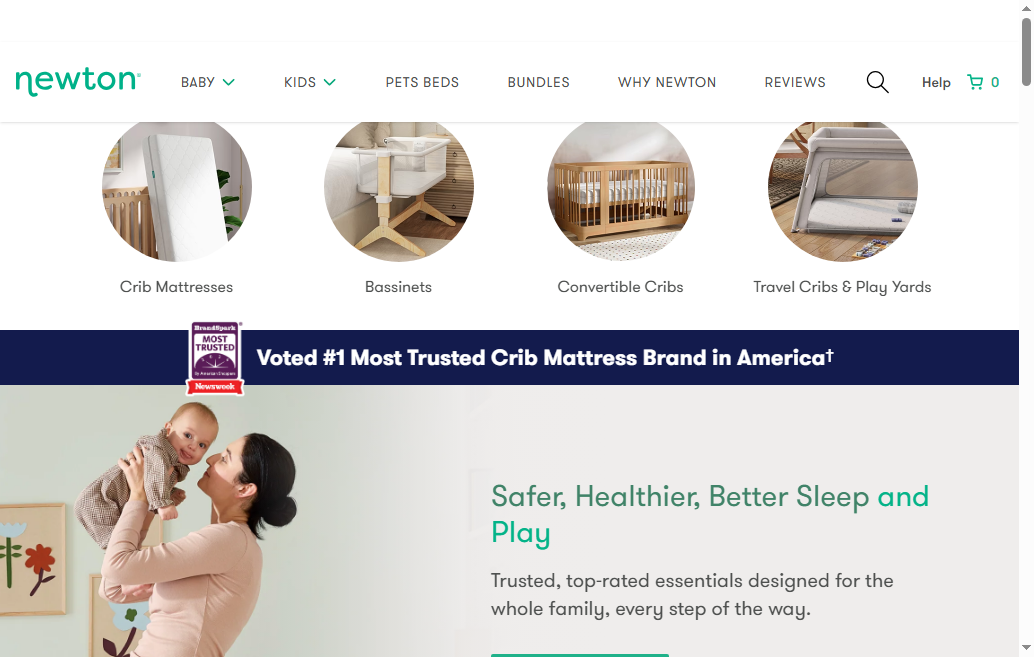
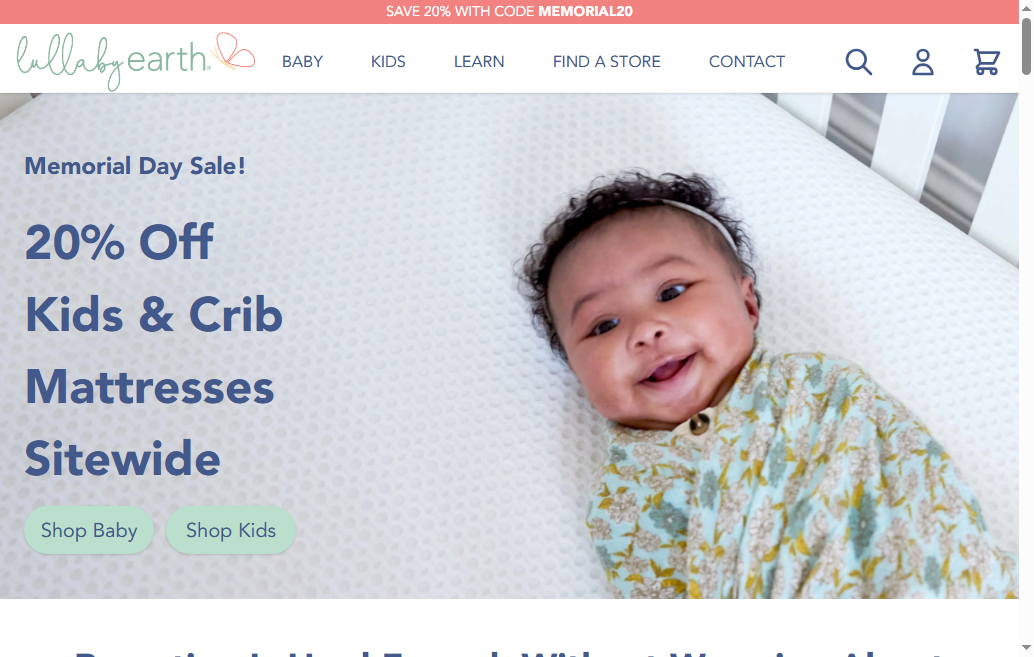
- Newton Baby's homepage features a passive 'Get free shipping with email signup' subscription section in the footer — but there is no proactive first-visit popup, exit-intent overlay, or scroll-triggered modal to capture email addresses from new visitors. The offer (free shipping) is valuable but invisible unless the visitor scrolls to the bottom of the page.
- 7 of 10 baby benchmark stores use a first-visit popup. Lullaby Earth shows a discount popup on first visit; Naturepedic uses an interest-segmented footer capture that is supplemented by promotional popups during sale periods. In-page newsletter sections convert at 0.3–0.8% of visitors; first-visit popups convert at 3–7%.
- Newton Baby's strongest conversion levers — the 100-night trial, free shipping, and Wovenaire safety story — are high-value email list incentives. A popup that leads with '100 Nights Risk-Free + Free Shipping' or 'Get $20 off your first order' delivered to a visitor who just arrived for the first time would capture the exact high-intent traffic Newton's paid media is driving.
- Email flows (abandoned cart, post-purchase, browse abandonment) typically drive 20–30% of US DTC baby brand revenue, but that only works if the list is large enough. Without a proactive popup, Newton is funding traffic acquisition while leaving list-building on the table.
- Launch a first-visit email popup triggered after 6 seconds on desktop and 10 seconds on mobile (or on exit-intent for desktop). Lead with Newton's strongest offer: '$20 off your first mattress order' or 'Get Free Shipping on Your First Order.' The free shipping offer already exists — the popup just surfaces it to the 90%+ of visitors who never reach the footer.
- Keep the popup single-field (email only). Run a 30-day A/B test: Version A = monetary discount ('$20 off'), Version B = trial-based messaging ('Start your 100-night risk-free sleep journey'). The trial-based version may resonate higher for safety-conscious parents who are not yet convinced, while the discount version will convert existing intent faster.
- Suppress the popup for visitors who came from a paid ad landing page that already has a specific offer — this avoids offer conflict. Fire it normally for organic, direct, and social traffic.
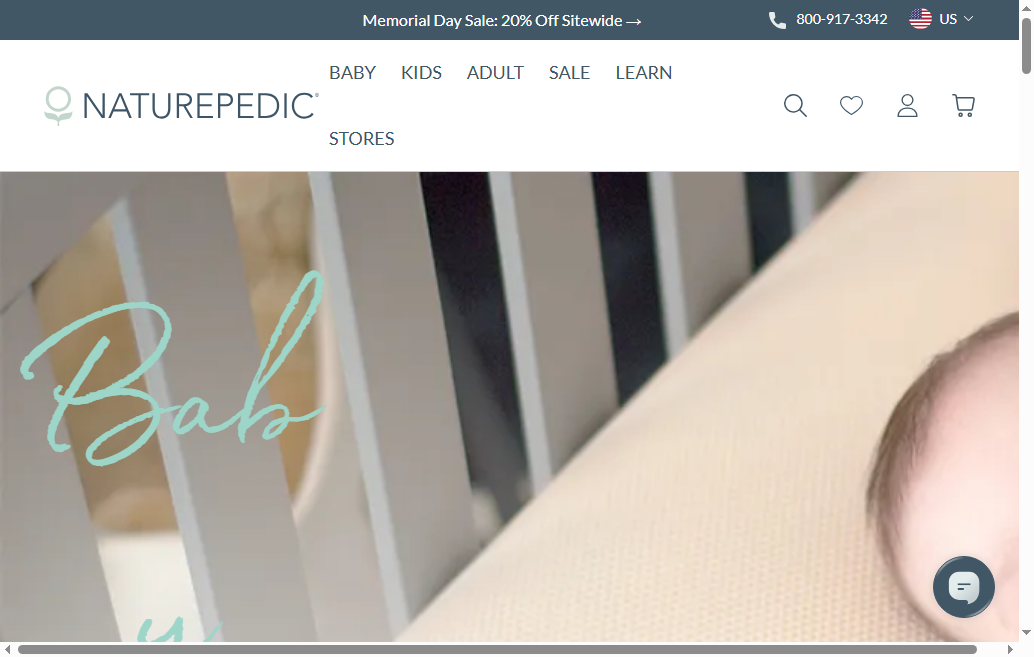
- Newton Baby's homepage hero focuses on product imagery and the '100-Night Trial' CTA — which is excellent — but does not surface the GREENGUARD Gold certification or any third-party safety credentials above the fold or in a dedicated trust section. Parents buying a baby mattress are making a safety decision first and a price decision second.
- 10 of 10 baby benchmark stores display safety certification badges prominently. Naturepedic leads with 7 certification badges (GOTS, GOLS, EWG VERIFIED, GREENGUARD Gold, Made Safe, FSC, 1% For The Planet) in a dedicated homepage section. Lullaby Earth similarly leads with EWG VERIFIED and Flame-Free certification above the product grid. These badges are the first objection-handler for parents who arrive wondering 'is this actually safe?'
- Newton Baby's Wovenaire technology is genuinely differentiated — no foam, latex, or springs — and the GREENGUARD Gold certification validates that claim independently. But a parent landing on the homepage for the first time does not yet know about Wovenaire. A certification-first trust bar placed immediately below the hero would pre-answer the 'is this safe?' question before the visitor even sees a product.
- The 'adachat' virtual expert widget is a strong secondary trust signal, but reactive (only appears when the visitor has a question). An above-fold certification section is a passive trust signal that works for every visitor, including those who would never initiate a chat.
- Add a horizontal 'Safety & Certifications' trust bar directly below the homepage hero — showing GREENGUARD Gold, Wovenaire technology icon, 100% Recyclable, and any additional certifications Newton holds. Each badge should link to the corresponding certification page for parents who want to verify. This pattern takes 20–40px of vertical space and requires no layout changes to the main hero.
- Move the Wovenaire cross-section diagram (currently shown on collection and PDP) to the homepage in a brief 'What makes Newton different' section — a 3-icon row showing 100% Breathable / 100% Washable / No Foam or Latex with the GREENGUARD Gold badge next to the claim. This translates the technical differentiator into a parent-readable safety statement.
- A/B test: Variant with a '2,000+ 5-star reviews, GREENGUARD Gold certified' social proof line in the hero headline vs. the current headline — validated by conversion rate and scroll depth past the hero.
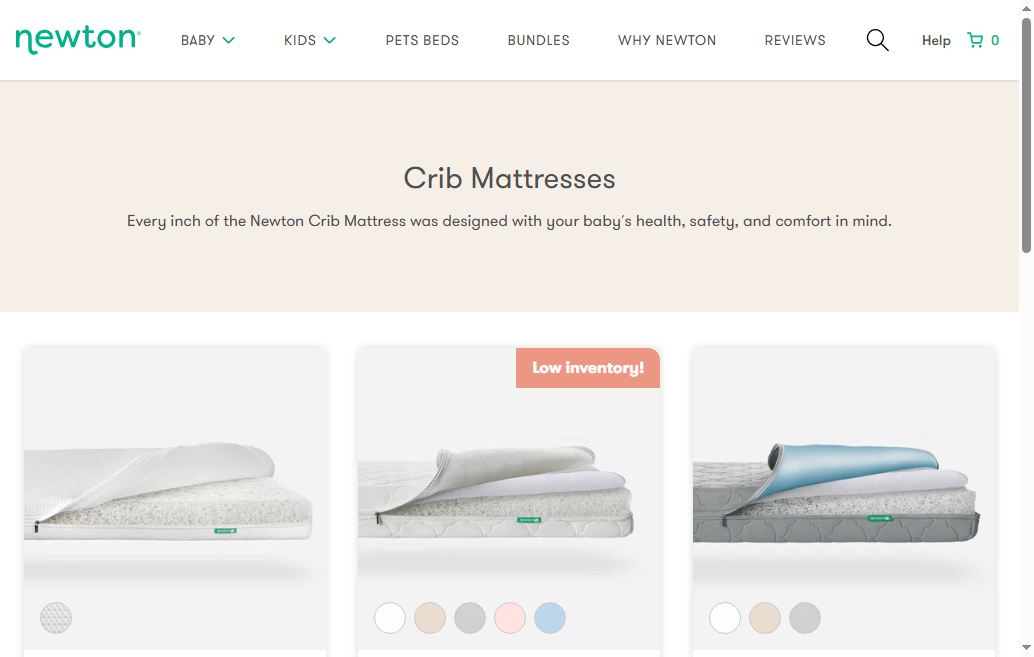
- Newton Baby's collection page at /collections/all displays products in a grid with pagination (page 1 of 5) but no visible filter controls for size (Standard / Mini), feature (Breathable / Waterproof), price range, or product type. A parent looking specifically for a mini crib mattress or a waterproof option cannot self-segment — they must either know the product name or scroll all 5 pages.
- 7 of 10 baby benchmark stores offer collection filters. Naturepedic provides filters by mattress type (Classic / Breathable / Breathable Ultra), size, and certifications. Babyletto organises by furniture type with clear subcategory navigation. Lullaby Earth uses a simplified 3-product layout that sidesteps the filter problem entirely by having fewer SKUs. Newton has 20+ SKUs across 5 pages — the scale of the catalogue demands filtering.
- Low inventory alerts ('Low inventory!' on the Original Crib Mattress) create urgency but are rendered less effective when a shopper can't quickly find the exact product they want and doesn't know which color options have low stock vs. which don't. A filter for 'In Stock' or size would let urgency signals actually convert.
- Newton Baby also sells a Kids line, Pet Beds, and Travel products — all mixed into /collections/all without a category filter. The absence of filtering means browsing parents are shown pet beds and travel cribs when they are looking for a standard crib mattress.
- Implement collection filters for: Product Type (Crib Mattress / Bassinet / Travel / Kids / Pet), Size (Standard / Mini / Kids Twin), Feature (Breathable / Waterproof / Breathable + Waterproof), and Price Range ($100–$199 / $200–$299 / $300+). These 4 filter dimensions cover the full product catalogue and map directly to how parents search for baby mattresses. Use Shopify's native product tag system to power filters — no additional app required if the theme supports it.
- Add a sort control with options: Best Seller, Lowest Price, Highest Price, Most Reviewed, Newest. Sort by 'Most Reviewed' will surface the Original Crib Mattress (3,966 reviews) as the social-proof default, driving higher-confidence purchase decisions for undecided visitors.
- Apply a 'Boost Commerce' or native Shopify filter app to the collections page within the current theme — this is a 1-2 day dev task for any Shopify developer familiar with OS 2.0 themes and does not require a custom theme rebuild.
- Newton Baby has 5 crib mattress models: Essential ($199.99), Original ($299.99), Waterproof ($349.99), Mini ($149.99), and Essential Waterproof ($249.99). The naming and pricing are clear but the feature differences between the Original and Waterproof, or the Essential and Essential Waterproof, require clicking into each PDP individually — there is no compare feature on the collection page.
- 6 of 10 baby benchmark stores offer a comparison tool. Naturepedic has a prominent 'compare crib mattresses' link on their collection page that opens a side-by-side table of materials, certifications, firmness, and dimensions. This is a high-intent conversion tool: shoppers who use comparison features convert at 2–3× the rate of those who don't, because they are actively evaluating — not passively browsing.
- The Essential vs. Original distinction (price difference: $100) is likely the most common shopper decision point on Newton's site. A parent who doesn't understand the difference may default to the cheaper Essential, or leave to read a third-party review comparison. Either outcome is worse than a native compare table that answers the question in 30 seconds.
- Babyletto also uses clear collection storytelling ('Why an All-Stages Crib?') to pre-answer feature comparison questions via guides rather than a compare tool — an alternative approach that Newton could adopt for its own 'Essential vs. Original vs. Waterproof' question.
- Add a 'Compare All Mattresses' sticky link at the top of the crib mattresses collection that opens a modal or dedicated page with a feature comparison table. Key rows: Price, Size options, Waterproof (yes/no), Breathability level, Materials, Certifications, Trial period. This answers the #1 shopper question (what's the difference?) without requiring PDP visits.
- Alternatively, add an inline 'Mattress Guide' banner at the top of the collection — a simple 3-step selection guide ('Step 1: Crib size → Step 2: Do you need waterproof? → Step 3: Budget') that routes visitors to the right product. This is lower dev effort than a full comparison table and can be built as a static HTML block.
- Add a 'Compare' checkbox to each collection card so shoppers can select 2–3 products and click 'Compare Selected' — this is a standard Shopify app capability available via Comparify or SearchPie.
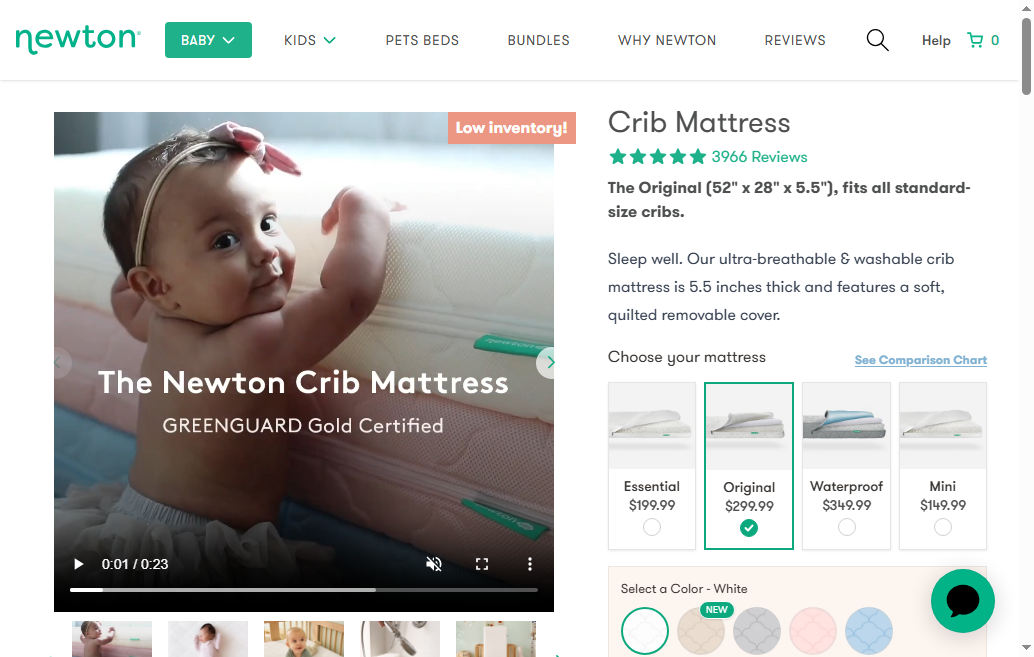
- Newton Baby's product detail pages display prices ($199.99–$349.99) and an Add-to-Cart button without any installment payment messaging. At these price points, US parents — especially first-time buyers — experience payment hesitation that BNPL directly addresses by reframing the purchase from '$299 today' to '$25/month for 12 months'.
- 7 of 10 US baby benchmark stores display Affirm or Klarna installment messaging on PDPs. Lullaby Earth shows 'As low as $17/month with Affirm' directly beneath the price. Naturepedic surfaces Affirm on PDPs for products over $150. The messaging does not require the visitor to use BNPL — it just removes the pricing objection for those who would otherwise abandon at the price display.
- Newton Baby's price range ($149–$349) sits precisely in the Affirm 'sweet spot' — under $500 (where shoppers expect to pay in full) but high enough to benefit from installment framing. BNPL adoption in US DTC baby products has grown from 3/10 stores in 2023 to 7/10 in 2026 as Affirm's merchant program expanded.
- The 100-night trial messaging ('try it risk-free') is a strong objection handler for the 'what if it doesn't work' anxiety. BNPL ('pay over time') addresses the separate 'I can't spend $300 today' anxiety. Both are needed — they handle different hesitation types and work synergistically when displayed together.
- Integrate Affirm or Klarna as a payment provider via Shopify Payments settings (15-minute setup). Enable the PDP widget to display 'As low as $X/month' beneath the product price. No custom theme code required — both Affirm and Klarna provide Shopify-native widgets that auto-render on PDP price elements.
- Position the BNPL messaging directly below the price and above the ATC button — this is the standard placement that achieves the highest visibility. Add the payment icons (Affirm, Klarna, Sezzle) to the payment methods trust strip near the ATC button to reinforce the option during checkout consideration.
- Run a 60-day post-integration analysis: track BNPL-assisted orders as a % of total orders and compare AOV of BNPL orders vs. credit card orders. Industry benchmark: BNPL-assisted orders average 10–15% higher AOV because the installment framing reduces anchoring against the full price.
- Newton Baby's PDP has a rich content structure — product images, Wovenaire technology cross-section, certifications, materials explanation, 100-night trial info, reviews — which is excellent for building purchase confidence. However, the Add-to-Cart button is positioned in the standard above-fold location and does not follow the user as they scroll through this content.
- On mobile, the typical Newton Baby PDP requires 8–12 scrolls to read through all the trust-building content (technology, certifications, reviews). At scroll position 4–5, the ATC button is no longer visible. A user who finishes reading and is now convinced must scroll back up to add to cart — this reversal scroll is a known drop-off point where ~15–20% of intent-ready mobile shoppers abandon.
- 6 of 10 baby benchmark stores implement sticky ATC on mobile. Lullaby Earth uses a persistent bottom bar with product name, price, and ATC button that stays visible throughout the PDP scroll. Naturepedic has a sticky header that includes a compressed ATC on scroll. Both reduce the 'scroll back' friction at the purchase moment.
- Newton's PDP content is genuinely conversion-driving — the Wovenaire explanation and certifications do their job of building confidence. The sticky ATC just ensures that confidence leads to an immediate action rather than a reversal scroll that can break the purchase momentum.
- Implement a sticky ATC bar for mobile that activates when the user scrolls past the main ATC button. The bar should show: product name + selected variant (size/color), price, and an 'Add to Cart' CTA. This is a standard Shopify theme section that can be added in 1–2 days of dev work without restructuring the PDP layout.
- Keep the sticky bar minimal — product name, price, ATC button only. Avoid adding variant selectors to the sticky bar (too complex on mobile) — instead, detect whether variants have been selected and, if not, scroll back up to the variant selector when the sticky ATC is tapped.
- A/B test sticky vs. non-sticky ATC for 30 days measuring mobile ATC rate and mobile CVR. Industry benchmark for this change: 8–15% mobile ATC rate improvement, with strongest impact on long-content PDPs like Newton's (which have rich technology explanation content that requires extended scroll).
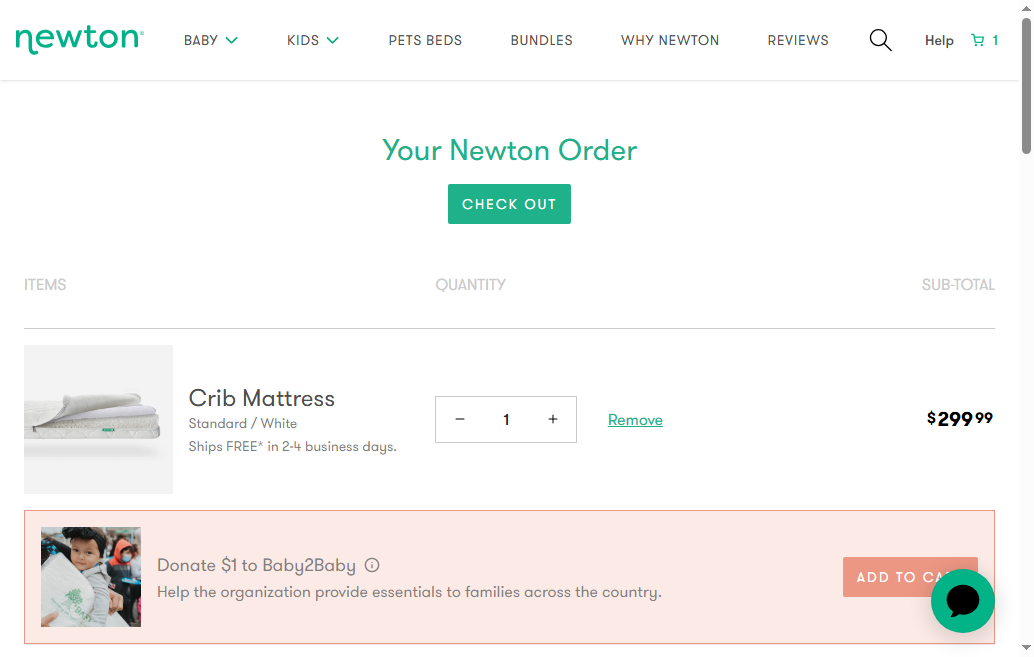
- Newton Baby's cart displays the selected mattress, quantity, price, and a Checkout button — but no product recommendations, bundle prompts, or accessory cross-sells. Every crib mattress buyer also needs fitted sheets, a waterproof pad, and/or a mattress protector — these are required accessories, not optional add-ons. The cart is the highest-intent page on the site and the natural place to prompt these purchases.
- 6 of 10 baby benchmark stores surface accessory upsells in the cart. Naturepedic prompts for organic protector pads and fitted sheets directly in the cart drawer. Babyletto suggests coordinating bedding accessories in the cart. These prompts convert at 15–30% of cart viewers because the accessory need is genuine — the shopper literally needs sheets for the mattress they are about to buy.
- Newton Baby sells sheets, pads, and covers ranging from $25 to $75 per item. A parent buying a $299 Original Crib Mattress who adds a $45 fitted sheet and a $65 waterproof pad increases their order to $409 — a 37% AOV increase on a single cart visit. This is the highest ROI upsell opportunity on the site because the cross-sell is directly functional rather than aspirational.
- The current cart also lacks a free-shipping progress bar. Newton offers free shipping (implied by the signup incentive), but the cart does not visually communicate this. A bar showing 'You qualify for free shipping!' or 'Add $X more for free shipping' reinforces the value of accessories and drives AOV simultaneously.
- Add an 'Complete your sleep setup' or 'Frequently bought together' block to the cart showing Newton-branded sheets, waterproof pads, and fitted covers matched to the mattress size in the cart. Use Shopify's native product recommendations API or a cart upsell app (ReConvert, AfterSell, or Rebuy) to dynamically match accessories to the mattress size selected.
- Display a maximum of 2–3 accessories in the cart cross-sell block — one fitted sheet (size-matched), one waterproof pad, and optionally a mattress protector. More than 3 choices creates decision fatigue. Pre-sort by 'most frequently bought with this mattress' to lead with the highest-converting accessory.
- Simultaneously add a free-shipping indicator to the cart: 'Your order includes free shipping!' displayed as a green check line near the order total. If Newton has a free-shipping threshold above $0, show a progress bar ('Add $X more to unlock free shipping'). Either variant reduces abandonment at the cart-to-checkout step.
- Newton Baby has a Bundles category in their navigation — suggesting they already have combined mattress + accessory SKUs or bundle pages. However, a shopper who adds a single crib mattress to the cart is not prompted to upgrade to a bundle or alerted that a bundle saves them money.
- Bundle messaging in cart is most effective when framed as savings vs. individual purchase: 'Add the Newton Sheet Set and save $15 vs. buying separately' outperforms 'You might also like this sheet set' because the savings hook is explicit. At the $299–$349 mattress price, a $15–$20 bundle saving is a strong nudge to add accessories.
- Babyletto explicitly promotes bundle savings on their homepage ('Bundle savings emphasis — dedicated section reducing price objections') as a key conversion strategy. This pattern is particularly effective for baby product brands where buyers need multiple coordinated items for nursery setup.
- This is an opportunity-tier finding because Newton has the bundle infrastructure already — the gap is only in surfacing it at the cart stage. The dev effort is low (a single cart banner or upsell block pointing to existing bundle pages).
- Add a bundle prompt to the cart for single-mattress buyers: 'Save $X — Add the [Mattress Size] Sleep Bundle (mattress + 2 sheets + waterproof pad).' Link directly to the bundle product page. If the visitor upgrades to the bundle, remove the individual mattress from the cart and replace it with the bundle SKU.
- Frame the prompt as a savings message, not a product recommendation: 'Get everything you need from day one and save $20 vs. buying separately.' This addresses the practical parent who is planning their nursery setup and avoids the feel of an upsell.
- Test a cart-to-bundle upgrade rate over 60 days. The benchmark for bundle upgrade prompts in US DTC baby brands is 8–18% of eligible single-item carts, depending on the savings magnitude and the copy framing.
Performance & Technology
Core Web Vitals, page-speed signals, and the technology stack powering Newton Baby
Core Web Vitals
Technology Stack
Performance & Technology Assessment
Mobile performance is needs work (—/100); desktop is needs work (—/100) on Shopify. Page-speed and Core Web Vitals are increasingly load-bearing for SEO and conversion in this category — addressing the weakest vital first is the single highest-leverage technical improvement available.
Confidential — Prepared for Newton Baby by Growisto | June 2026
App Ecosystem
What's installed vs what's missing from best-in-class Toys & Hobbies stores
Present (5)
Missing (6)
App Stack Assessment
Newton Baby has a strong foundation: thousands of verified reviews, a differentiated virtual expert chat (adachat), and Shopify's reliable infrastructure. The brand's trust assets are genuinely strong — the Wovenaire technology story and GREENGUARD Gold certification give Newton a credibility edge most competitors struggle to match. The gap is in the conversion layer: a first-visit email popup (footer signup alone captures a fraction of what proactive modals achieve), BNPL for the $199–$349 price range (Affirm/Klarna display is now expected by US parents comparing baby mattresses), and collection page filters (the current no-filter experience forces shoppers to page through all products to find a mini crib or waterproof option). Adding these three — plus a cart upsell for sheets and pads — would close the largest remaining conversion gaps without changing Newton's strong brand identity.
Confidential — Prepared for Newton Baby by Growisto | June 2026